
How to Search Civil Dockets
Greene County Superior civil searches begin with the Georgia E-Access directory. The directory points this court to PeachCourt. Georgia runs no single statewide public case-query portal. PeachCourt needs an account. Its public login page offers no anonymous Greene civil docket preview.
The clerk's office is the fallback. Deborah D. Jackson, Clerk of Superior Court, holds Superior civil and domestic records. Call 706-453-3340 or go to Suite 109 at 113 N Main Street in Greensboro. Magistrate civil files sit with a separate number, 706-453-3346, in Suite 113. Estate and guardianship matters stay with the Probate clerk in Suite 113.
- Choose the court from the claim, case type, and filing papers.
- Search Superior matters through PeachCourt by party name or case number.
- Confirm the filing year, court, parties, and action number.
- Read service, motions, settings, orders, disposition, and appeal entries in order.
- Call the custodian before mailing or visiting for an older or certified copy.
A related Greene County case search explains how name and number fields differ.
Greene Civil Cases Start Locally
A PeachCourt hit is only the index, not the case file. The complaint, a signed order, an exhibit, or a certified judgment still has to come from the Superior Clerk. The clerk also keeps the older records. And the clerk keeps the docket books that Georgia court rules require.
No online result does not mean no Greene County civil case exists. Rethink the spelling. Try a prior party name, a related-action number, the filing year, and the court. A Magistrate claim or a Probate estate will never surface as a Superior result just because the names match.
Best fallback: Give the responsible clerk the party names, likely year, case type, and any action number. Ask whether the file is active, archived, restricted, or held by another court.
What a Civil Docket Shows
Uniform Superior Court Rule 39.2 lists what a civil register must hold. A Greene County civil docket follows the case from start through service to disposition. It also ties together pleadings, transcripts, motions for new trial, appeal notices, remittitur, minutes, final records, and storage.
| Case identity | Action number, cause of action, parties, attorneys, and filing date. |
|---|---|
| Costs | Advance filing costs and later additional costs. |
| Service | Date and type of service on a party. |
| Trial | Trial date, jury or nonjury status, verdict, mistrial, and final judge. |
| Disposition | Date and type, including dismissal, settlement, or judgment. |
| Later activity | Fi.Fa., pleadings, transcripts, new-trial motions, appeal, and remittitur. |
Index lines run short. When the relief, the reasoning, or a party's duty matters, ask the clerk for the complaint, the motion, or the signed order itself.
Greene Civil Filing Form Fields
The civil and domestic filing form from the Ocmulgee Judicial Circuit cannot run a docket search. What it can do is show you what the clerk records when a Greene County civil case is opened. Fields cover the court and county, the filing date, the action number, party names, attorney names and bar numbers, and whether someone is self-represented. There is also the case type, any related action, a redaction certification, an interpreter language line, and an accommodation need. That metadata is what a court docket entry is built from.
On the general civil side, the choices run from automobile tort and general tort to contract, garnishment, real property, injunction or writ, and restraining petitions. Domestic options include adoption, contempt, divorce or separate maintenance, family violence, modification, custody, paternity, legitimation, and support. Some of those categories stay tightly restricted even when a docket line itself is public.
The official Ocmulgee interpreter request lists its own fields: date, time, county, civil-or-criminal, case number, person, role, and language.
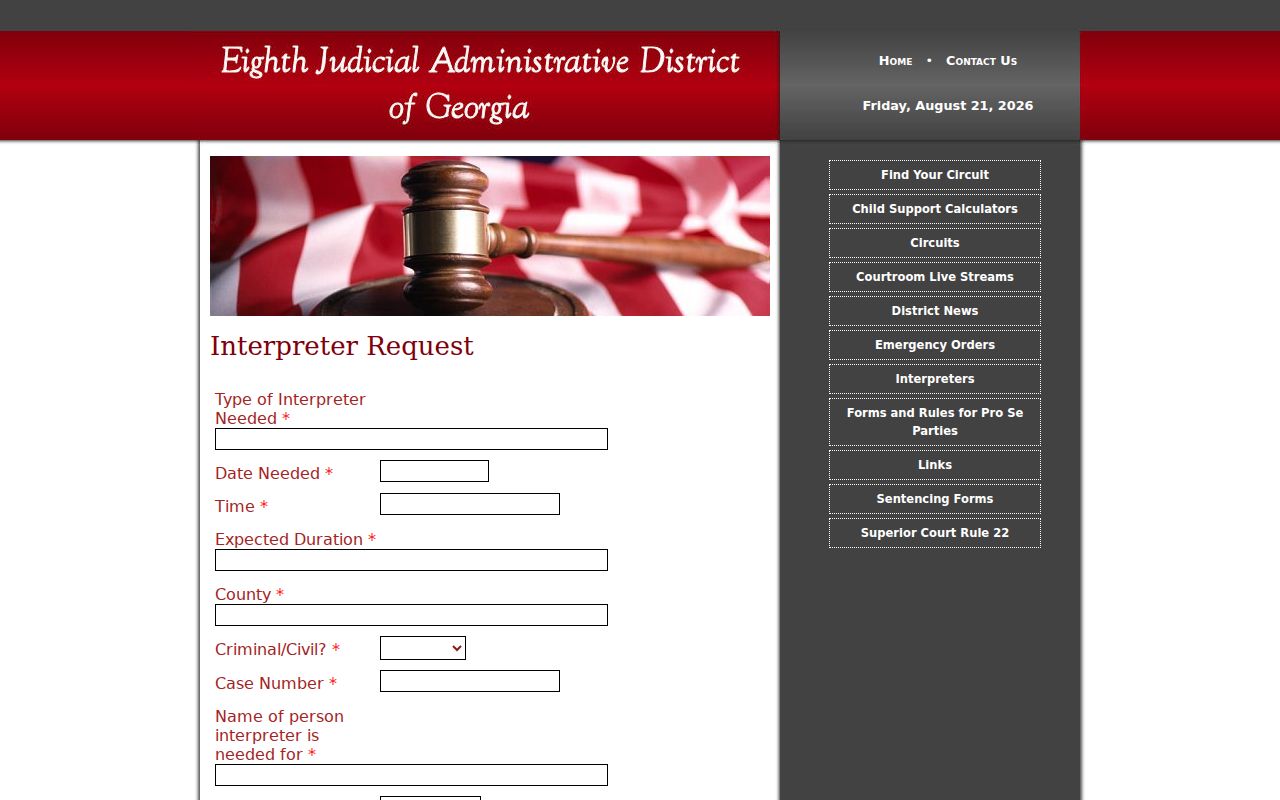
Those fields explain why an exact action number and setting date matter. They let court staff tie an interpreter request to the correct Greene County civil docket entry.
Types of Civil Cases on Dockets
County sources identify Greene County Superior Court as the general civil and domestic court. Magistrate Court takes claims up to $15,000. It also handles dispossessory cases, garnishments, abandoned vehicles, and personal-property foreclosure. Probate Court holds estates, guardianships, and other probate proceedings. Municipal courts handle traffic and ordinance matters, not the ordinary civil docket register.
| Civil matter | Likely Greene court | Record route |
|---|---|---|
| Major civil, property, tort, injunction | Superior Court | PeachCourt and Superior Clerk |
| Domestic relations | Superior Court | Superior Clerk, subject to access limits |
| Claim up to $15,000 or dispossessory | Magistrate Court | Magistrate clerk |
| Estate or guardianship | Probate Court | Probate clerk |
Venue can hinge on facts that a category label never shows. Ask the clerk to confirm the right filing office. Picking a court from the dollar amount or a short case type alone can send you to the wrong civil docket.
Greene Magistrate Civil Boundary
Civil claims in Greene County Magistrate Court stop at $15,000. The official Magistrate Court page spells out that ceiling. It lists dispossessory, garnishment, and personal-property work. That court keeps its own docket route. A small claim there will not surface if you search it like a Superior Court civil action. The two tracks are simply different.
Dispossessory or garnishment matter? Ask the Magistrate clerk for the case number. The clerk can also give service details, hearing date, order, and copy process. When enforcement grows out of a Superior judgment, start with that Superior case instead. Then follow any garnishment or Fi.Fa. reference attached to it. A Fi.Fa. is the writ that records and enforces a judgment lien. One caution applies. A dollar limit only sketches Magistrate jurisdiction in broad terms, so the clerk should confirm the right venue for the actual claim.
Settings and Hearings on Civil Dockets
A civil setting is a scheduled court event, not an outcome. Greene County civil dockets can carry motion hearings, status conferences, pretrial events, bench trials, jury trials, and more. Read the date alongside the event type, the judge, the courtroom, and any later reset. A continuance shifts an event to a new day. It never dismisses the case.
The Ocmulgee Judicial Circuit calendar page itself tells users to verify dates with the county clerk. Treat the circuit calendar as a general planning source rather than a complete case-level docket. When timing truly matters, rely on the filed notice plus clerk confirmation.
Interpreter access works event by event. The circuit form asks for the date, time, duration, county, case number, person, role, and interpreter type needed. Making that request changes nothing about the setting. It is not a docket search either.
Greene Civil Outcomes Differ
Default, nonsuit, dismissal, settlement, and judgment are not synonyms. A default follows when a side fails to respond. A voluntary nonsuit or dismissal ends the case another way. Settlement is the parties' own resolution; judgment is the court's formal ruling. A Greene County civil docket can show a settlement event and then a later dismissal or consent order.
- Service
- Formal delivery of process that starts the response period.
- Default
- A procedural status that may arise when a required response is not filed.
- Fi.Fa.
- A writ associated with recording and enforcing a money judgment.
- Remittitur
- The document returning authority after appellate review.
Follow the sequence: complaint, service, answer, motions, hearings, order, disposition, then enforcement or appeal. A motion or proposed order is a request, so never read a final result into one.
Public Access to Civil Dockets
Georgia court records are governed by court rules and judicial procedures, not by the Georgia Open Records Act. That law covers agencies. The Attorney General's court-record explanation draws exactly that line. So a Greene County civil file request goes to the court clerk. Never use the county open-records form.
Uniform Superior Court Rule 21 lets courts limit access through the court process itself. Rule 36.17 makes filers redact Social Security, taxpayer, account, and birth-year data. Rule 21.6 shields certain family-violence and stalking identifiers. Rule 39.6 keeps adoption dockets confidential. Some domestic records may be sealed or released only in redacted form.
Restricted file: Ask the clerk whether a public index, redacted copy, or docket-only view is available and what court order would be required for more.
Greene Civil and Federal Records
A Greene County state civil action is not the same thing as a federal civil or bankruptcy docket. Federal cases serving Greene County go to the Middle District of Georgia, including its Athens Division. The official Athens Division page lays out the federal route.
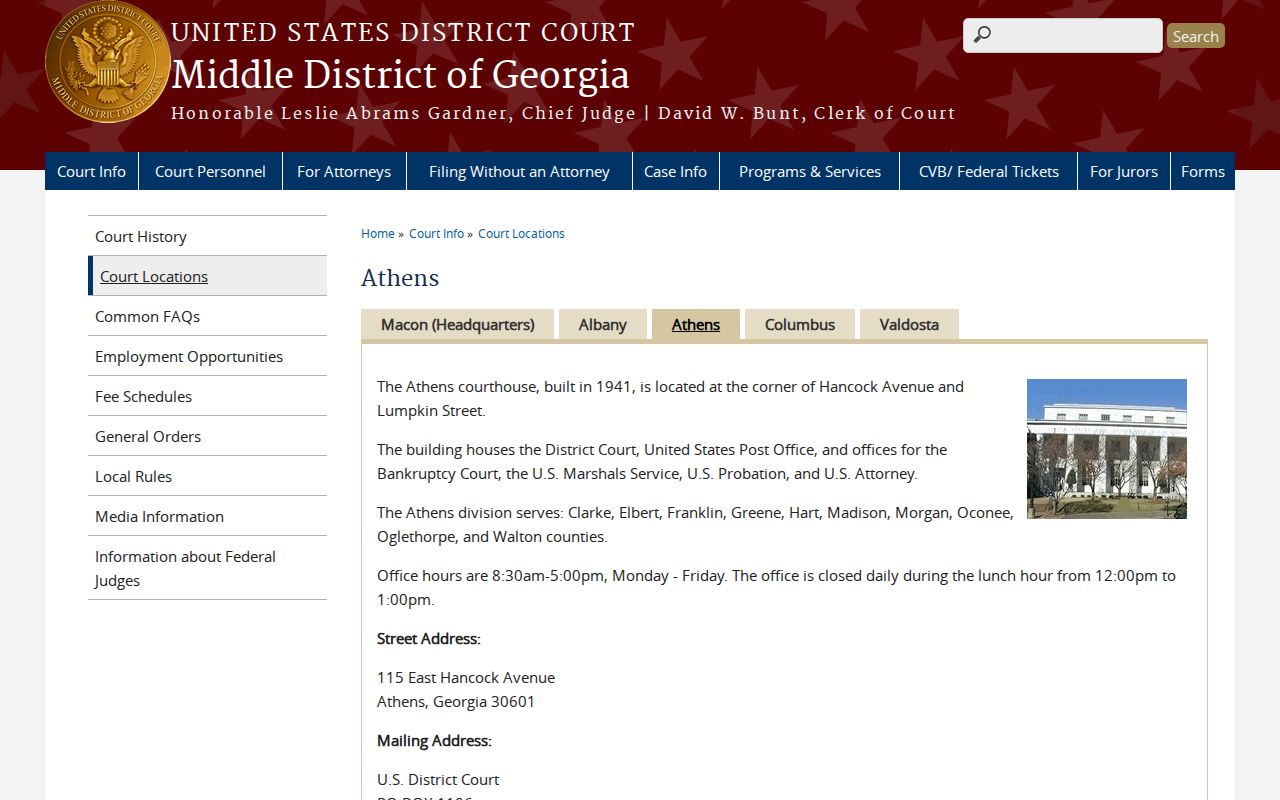
That federal route still does not replace the Greene Superior Clerk for a state civil file. For bankruptcies, the Middle District Bankruptcy Court keeps its dockets through federal systems.
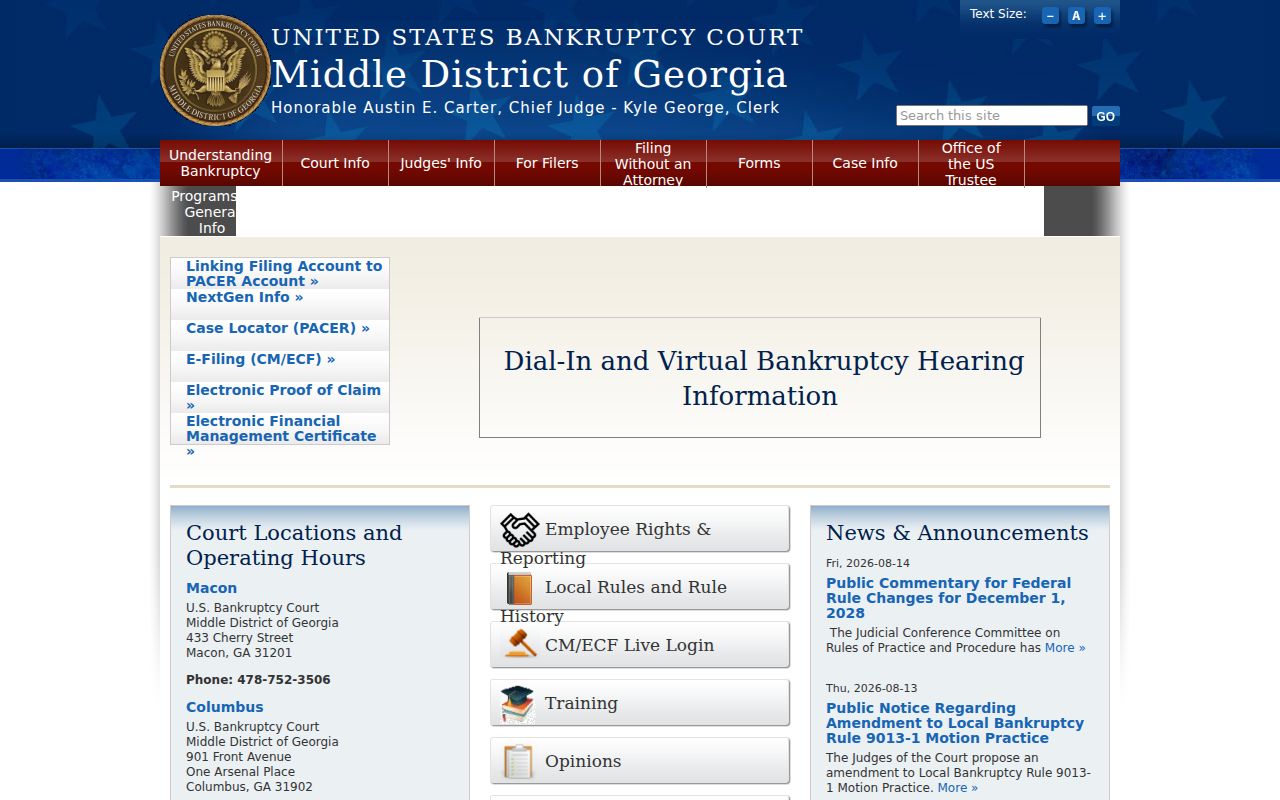
Bankruptcy records thus live with a different custodian, number format, and access system. The official PACER fee notice covers a temporary federal fee change effective in 2027.
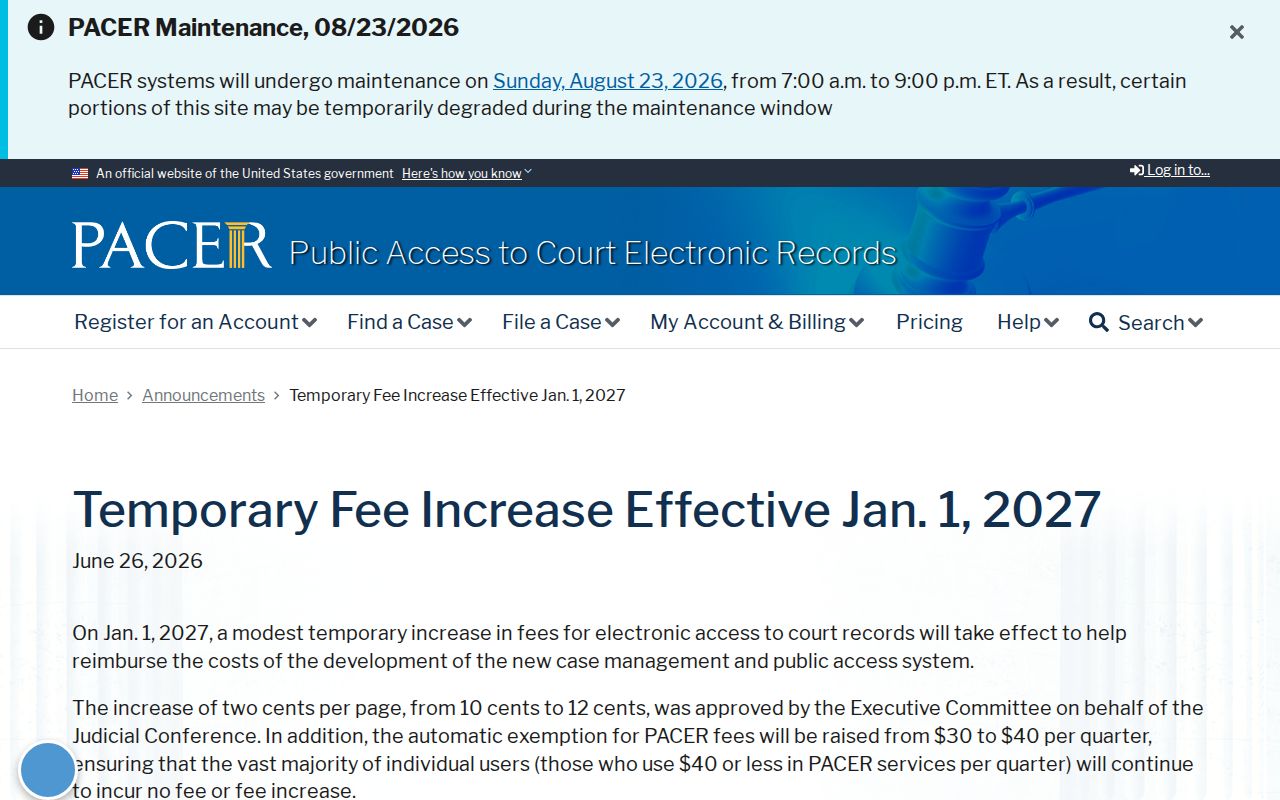
Federal PACER charges are their own thing. They are not Greene County clerk copy fees, so never apply them to a state request.
Greene Civil Rules Shape Dockets
The Supreme Court of Georgia rules index is the official rule layer for civil procedure and record access.
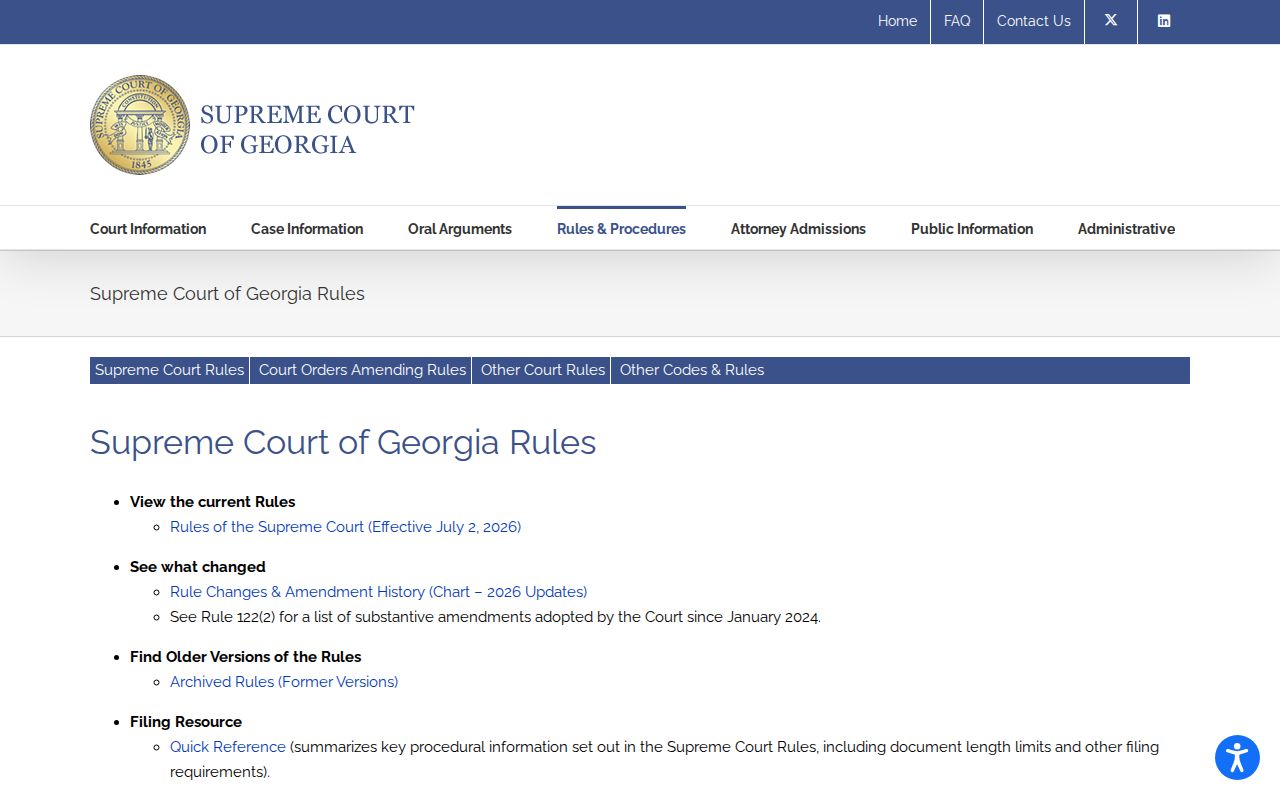
The rules index points you to current authority. The Greene clerk remains the source for the actual local case record. Rule 39.2 cites minutes, final-record pages, and storage boxes. That explains why older civil research may move from a screen to a clerk-held book or archived file. Give the action number and year whenever you can. If the index lacks the paper, do not run an undefined search. Request the specific complaint, order, judgment, transcript reference, or remittitur. Court rules can change. Rely on the current official rule text. Verify the case entry with the original custodian.